
The story
goes with you.
- DisciplineProduct design
- Year2022
- PlatformsWear OS &
Android Automotive - ScopeUX/UI concepts
& interaction flows
My work explored how Storytel could live beyond the phone. The focus was a Wear OS listening experience, alongside concepts for Polestar’s in-car display and authentication across devices.
Each surface called for a different hierarchy. On the watch, space was tight. In the car, attention was limited. The challenge was to preserve what makes Storytel familiar while giving each experience a shape of its own.
Big stories.
Small screen.
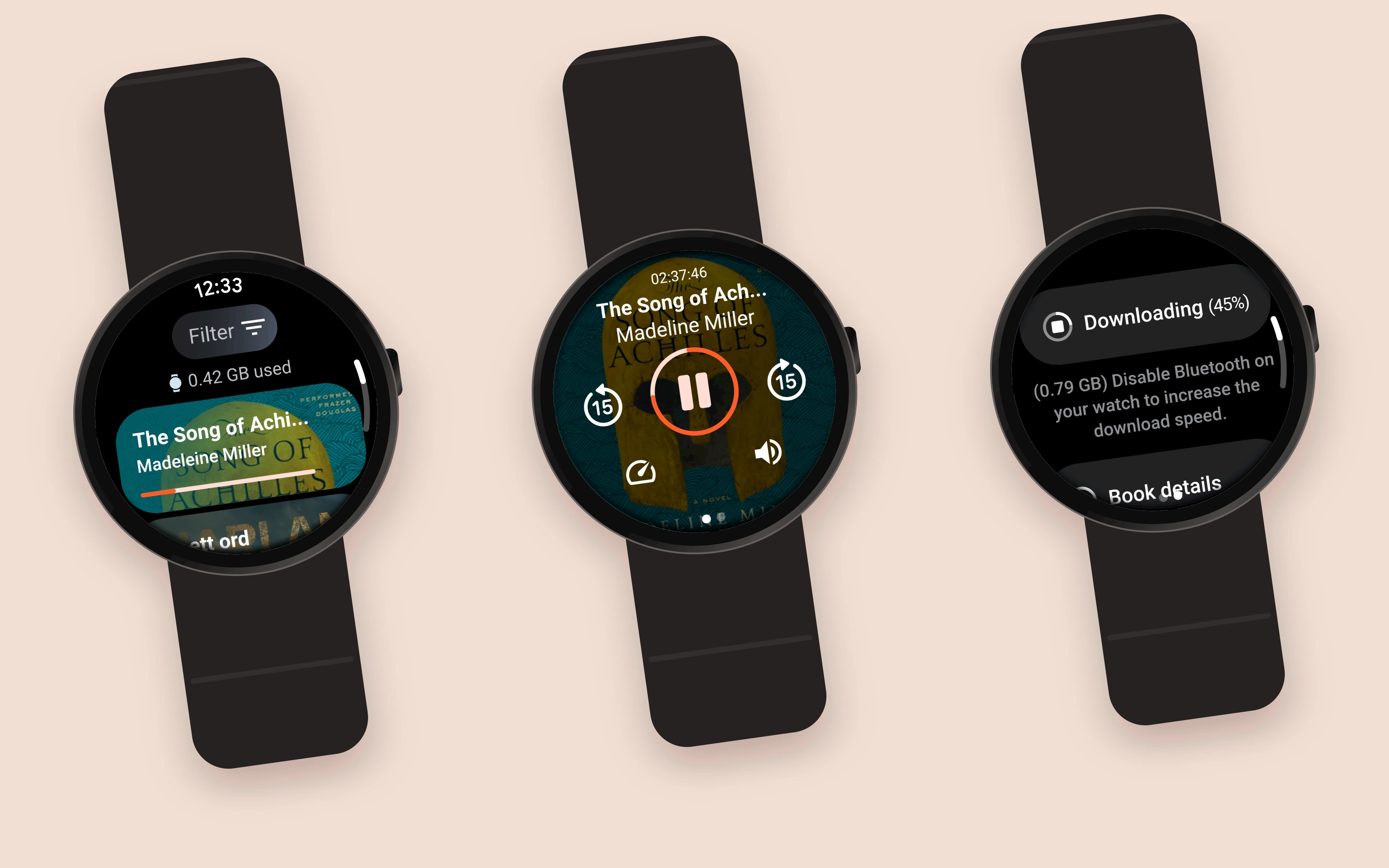
The watch experience centred on a compact listening loop: find a book, press play and keep control close at hand. The bookshelf, player and download options formed the core of the design.
Start with the realities of the wrist.
The exploration included comparisons with Spotify, Audible and BookBeat on watches. Notes called out friction around phone-dependent downloads, sync queues and sign-in. These were useful prompts for looking beyond the player itself, at everything that has to work before someone can listen.
A bookshelf that fits the moment.
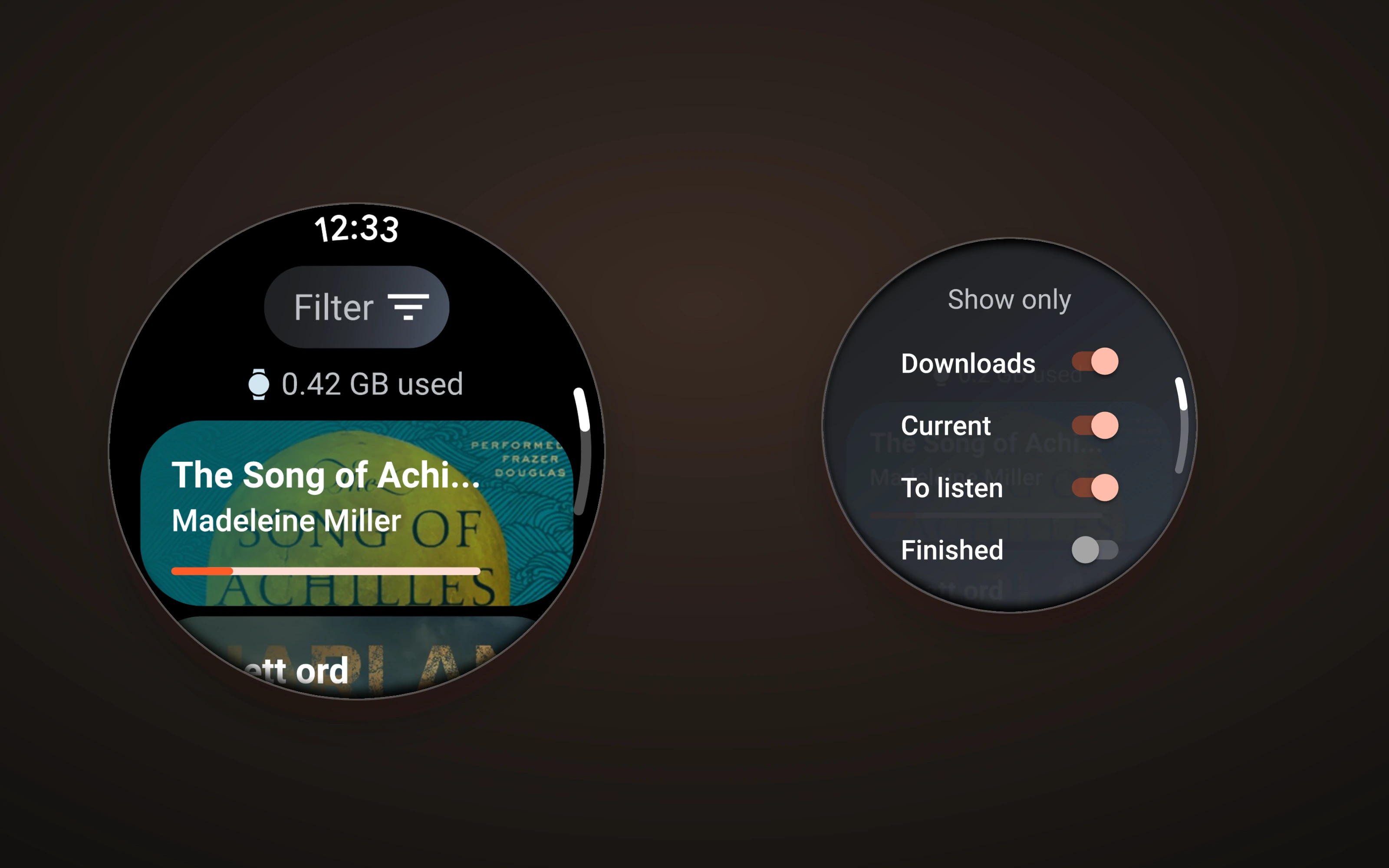
Cover-led cards make each title recognisable within the circular viewport. The current book, listening progress and storage use stay visible, while filters let listeners narrow the shelf to downloads, current books, saved titles or finished stories.
Artwork, title and author travel together, giving each book a familiar identity even when only part of the shelf is visible.
Filters give the listener a way to bring the right books forward without adding another permanent navigation layer.
Give listening the centre.
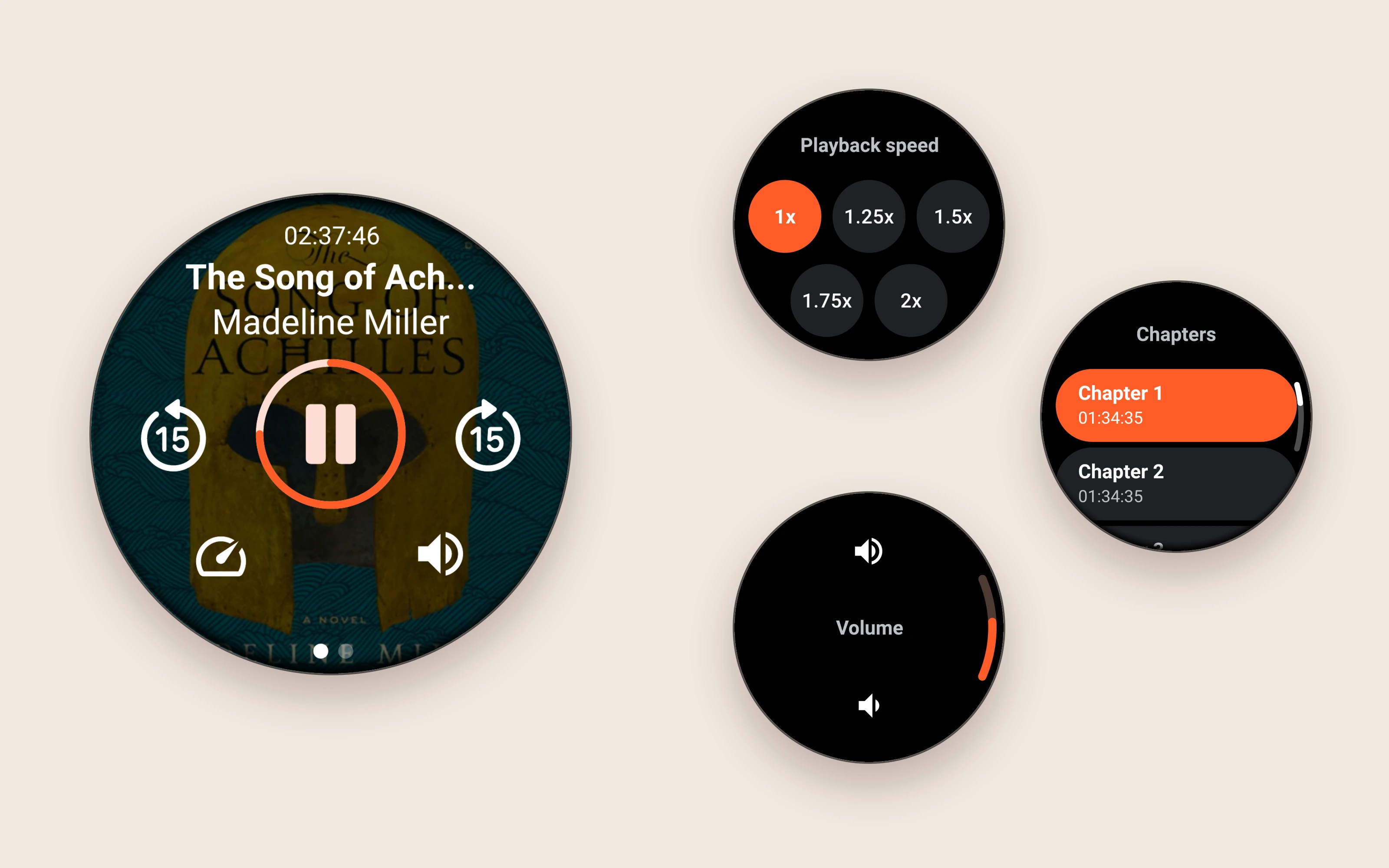
The main playback action sits in the middle of the watch face, with 15-second skips on either side. The book cover remains in the background, keeping the story visually present while the controls take priority.
Playback speed, chapters and audio controls open into focused views. Each task gets room to breathe, so the small display does not have to carry every option at once.
The experience between play and pause.
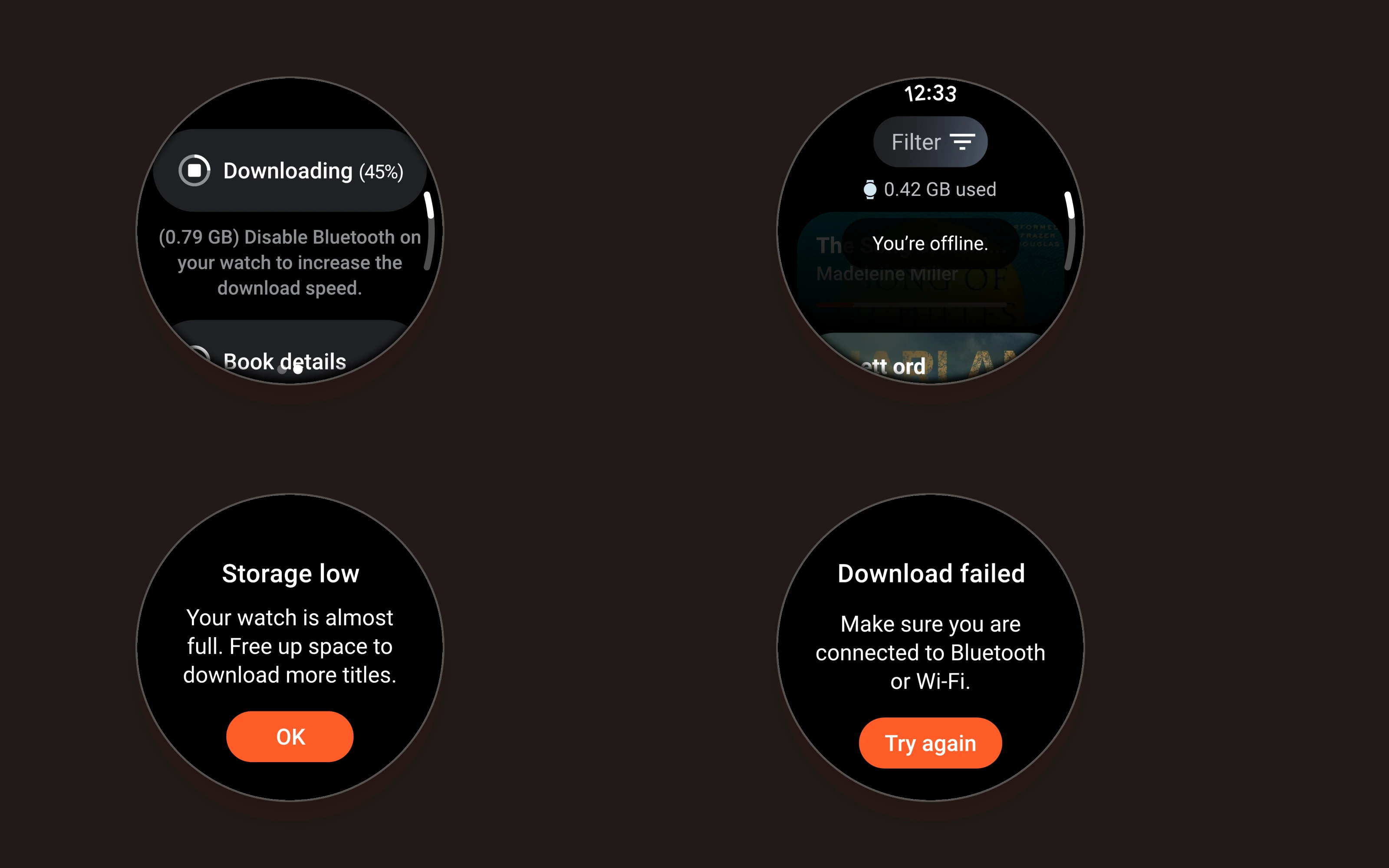
The specification also covered download progress, offline access, storage limits, failed downloads and missing audio output. These states explain what is happening and give the listener a next step.
A download shows its progress. A storage warning asks the listener to free up space. Removing a download explains that the book will no longer be available offline. The aim was to make the watch’s constraints understandable within the experience.
A new chapter.
Behind the wheel.
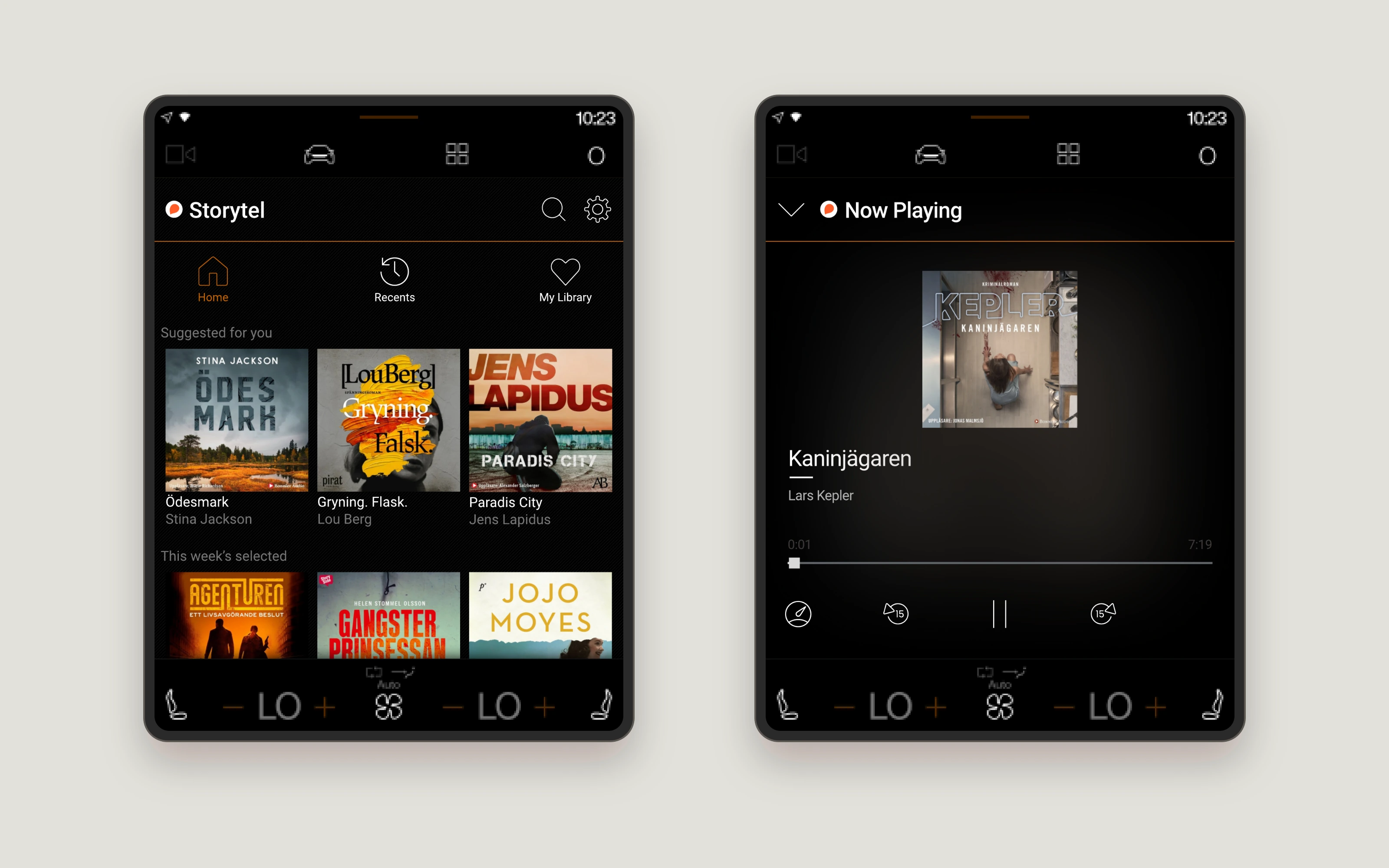
The second part of the work adapted Storytel to Polestar’s in-car display. The layout had to live inside the vehicle’s interface, with system navigation and climate controls already occupying part of the screen.
Familiar content. A different hierarchy.
Home, Recents and My Library provide the main routes into the catalogue. Large covers support recognition, while a persistent mini-player keeps the active book available when moving through the library.
The full player brings the cover, title, progress and transport controls into one focused view. Playback speed is available in a separate state, keeping the primary listening controls clear.
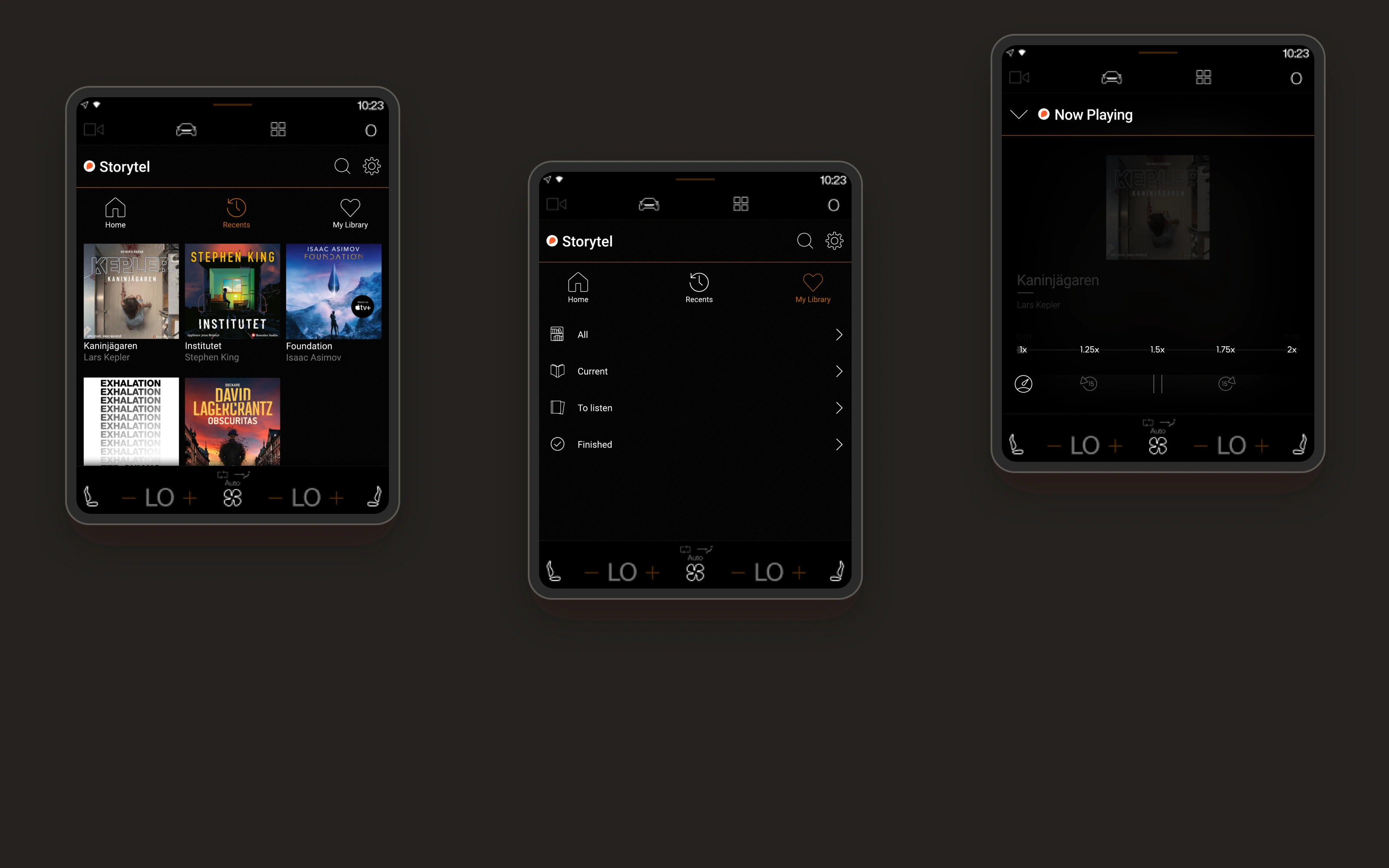
Recents and library categories make existing listening choices easy to locate within the broader offer.
Storytel’s content occupies the app area while the vehicle’s own controls remain visibly distinct.
New device.
Same Storytel.
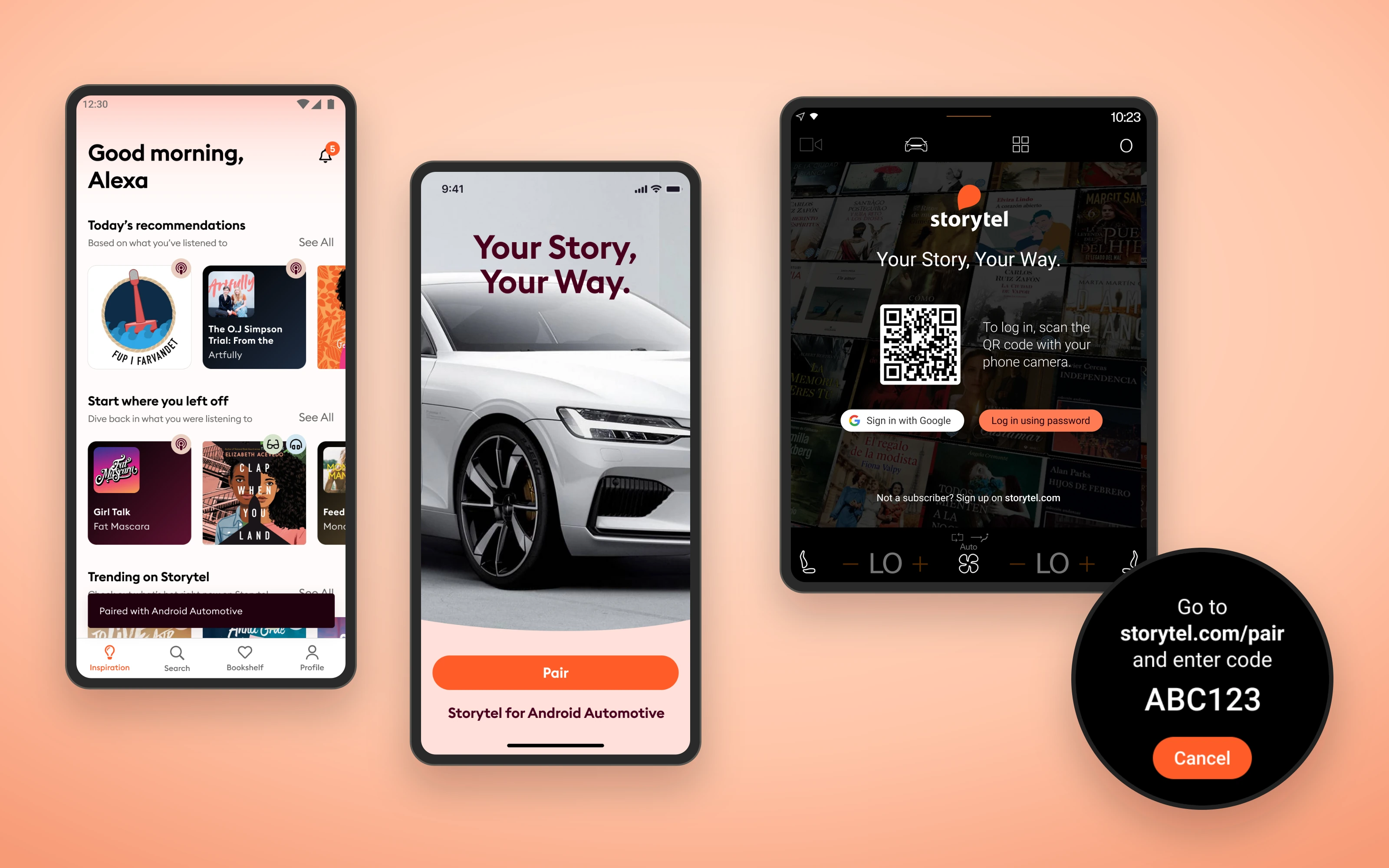
Getting into the account was part of the experience too. The authentication work explored phone-assisted pairing, QR codes and short pairing codes across the watch and in-car interfaces.
Let the phone help with the setup.
The concepts use the phone as a bridge into a new device. A watch can show a pairing code; the in-car display can offer a QR code to scan. Companion screens on mobile give that setup a clear destination.
The Wear OS specification also accounts for failed pairing, missing connectivity and direct login. The wider goal was a coherent route from opening Storytel on a new screen to getting back to a story.